


Supporting Your Body After Mold Exposure: The 4-Step Approach
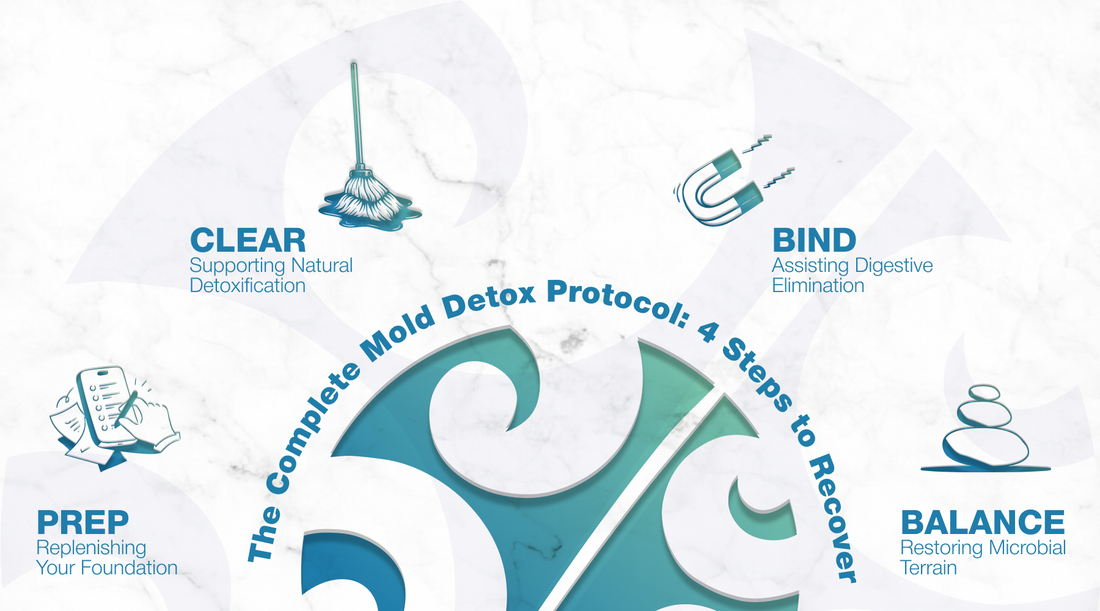
How Our Mycotoxin Kits Work: The 4-Step Approach Explained
If you've been struggling with mold exposure, you've probably tried supplement after supplement hoping something will finally work. Maybe you've felt worse instead of better. Or perhaps you've seen temporary improvements that didn't last.
The missing piece? Structure.
Your body has natural detoxification pathways that want to work. They just need support in the right order. That's where our 4-Step Mycotoxin Kits come in, following the body's natural biological process: Prep → Clear → Bind → Balance.
This isn't about replacing one supplement with another. It's about building support sequentially, adding each step as your body is ready.
Think of it like building a house: you need a strong foundation before you add walls, and walls before a roof. The order isn't arbitrary. It's biological.
Why Sequential Support Matters
Most people approach mold exposure by throwing everything at the problem at once, or jumping straight to aggressive binders or antifungals. Here's what often happens: things get harder before they get better.
Your body's natural processes don't work in isolation. They work in sequence. Environmental exposure creates specific challenges that need to be addressed in a specific order. Starting with aggressive approaches before your body is ready can place demands on systems that aren't yet prepared.
It's not that support doesn't work. It's that your body needs preparation first.
Our 4-step approach addresses this by building support progressively, giving your body comprehensive, layered support across the processes that matter most.
Step 1 - PREP: Building Your Foundation*
Helps replenish your body's nutritional foundation. Environmental exposures can increase the body's demand for certain nutrients, often faster than diet alone can keep up. This step delivers those nutrients in forms your body can easily absorb, helping support overall wellness and a stable foundation.*
Why It Matters:
Environmental exposure increases your body's utilization of specific nutrients while also making absorption harder. If your body can't absorb what you're taking, the amount doesn't matter. Bioavailable forms exist for exactly this reason.
Step 2 - CLEAR: Supporting Natural Detoxification Pathways*
Supports your body's natural detoxification systems by promoting optimal liver and kidney function. These organs work together to process environmental toxins through normal elimination. This step also emphasizes mast cell balance, which can influence comfort and tolerance during periods of increased demand on these pathways.*
Why It Matters:
Water-damaged environments contain more than mold spores. Supporting the organs responsible for processing and eliminating environmental compounds, before adding more demand, is what makes this step essential to the sequence.*
Step 3 - BIND: Supporting Digestive Elimination*
Promotes healthy digestion and elimination. The gut plays a critical role in binding and escorting unwanted compounds, including environmental toxins, out of the body through normal digestive elimination. This step provides gentle support so things keep moving in the right direction.*
Why It Matters:
Compounds that aren't eliminated can recirculate. Supporting regular, healthy elimination is how this step helps the body complete what the previous steps set in motion.*
Step 4 - BALANCE: Restoring Microbial Terrain*
Encourages a healthy microbial environment and immune response. By introducing this step after your body's detoxification and elimination pathways are supported, you're better positioned to focus on long-term balance.*
Why It Matters:
Introducing microbial support too early, before detoxification and elimination pathways are supported, can work against the process. Sequence is what makes this step land the way it's intended to.*
Where to Start: The 60 Day Support Plan
Every body is different, and there is no prescribed timeline for moving through these steps. What we offer is a suggested starting point, not a rigid schedule.
One way to get started:
Begin with Prep, then add each subsequent step weekly, continuing all four steps for the remainder of your 60 days. The focus of each phase is below.
| Start | Add | Focus |
|---|---|---|
| Prep | Week 1 | Building your foundation* |
| Clear | Week 2 | Supporting detoxification* |
| Bind | Week 3 | Supporting elimination* |
| Balance | Week 4 | Reclaiming your terrain* |
| Continue | Weeks 5-8 | Long-term wellness* |
Listen to your body as you go. Some move through steps quickly, others take more time. There's no wrong pace.
This is a suggested starting point, not a prescribed timeline. Always consult with your healthcare provider before starting any new supplement regimen, especially if you are pregnant, nursing, taking medication, or have a medical condition.
Go Deeper: Learn About Your Specific Mycotoxin
The 4-step framework is the foundation. But not all mycotoxins behave the same way.
Each mycotoxin has its own characteristics, its own tendencies, and its own relationship with the body's systems. Ochratoxin is a "persister" that binds tightly to blood proteins and can circulate for weeks. Aflatoxin places distinct demands on liver function. Gliotoxin is produced by fungi that can colonize the body itself. The differences matter, and understanding which mycotoxin you're dealing with can provide important context as you explore next steps.
Our Mycotoxin Guides go beyond the 4-step framework to cover:
- What each specific mycotoxin is and where it comes from
- How it interacts with the body's systems
- Nutrition considerations specific to that mycotoxin
- The science behind each step of the kit, tailored to that toxin
- The complete kit contents and suggested use for each product
Each guide is designed to give you the deeper context that a general overview can't. If you've tested positive for a specific mycotoxin, or you suspect a particular exposure, your guide is where to go next.
👉 Explore Our Mycotoxin Guides
Not ready to dive into a full guide? Our Quick Reference Sheets give you a snapshot of each kit at a glance. Products, steps, and suggested use, all on one page.
👉 Download a Quick Reference Sheet
These statements have not been evaluated by the Food and Drug Administration. These products are not intended to diagnose, treat, cure, or prevent any disease. This content is for informational and educational purposes only and is not intended as a substitute for advice from your physician or other healthcare professional. Consult your healthcare provider before starting any new supplement regimen. Individual results may vary.
Tags:
Educational Hub, Mycotoxin Science


